


Choose paint sheen by balancing the look you want, the condition of the surface and how it will be cleaned. Matte or eggshell is a sensible starting point for many walls, flat for many ceilings, and satin or semi-gloss for doors and trim. Then check the specific product: a washable matte can suit a busy room, and a bathroom needs a coating approved for its conditions rather than an automatic jump to the shiniest finish.
Understand what the finish name tells you
Sheen describes how much light a painted surface reflects. It affects how the color reads, how noticeable small surface defects become and how the room looks from different angles. It does not, by itself, tell you whether a paint is suitable for cabinets, damp conditions or repeated washing.
The usual progression is flat, matte, eggshell, satin, semi-gloss and gloss. Names such as pearl, velvet and low lustre complicate the picture. Do not treat one manufacturer’s satin as an exact visual match for another product with the same name. Sherwin-Williams’ gloss and sheen guide explains how finishes are measured and why product characteristics matter.
When comparing samples, keep the product line attached to the finish name. “Eggshell walls” is less useful than the exact brand, product and sheen. Ask the painter to show you an example of the proposed finish before using it throughout connected rooms.
Know the practical tradeoffs
Flat and matte
Low-reflection finishes can make minor surface irregularities less conspicuous. They are useful when you want the eye to settle on the room rather than light reflecting across the walls. Flat is a common ceiling choice; matte is worth considering for living spaces where you want a similarly quiet appearance.
Cleaning performance varies. Some low-sheen products are formulated for washability, while others mark or develop shiny rubbed areas more readily. Ask about the exact paint rather than assuming every matte finish behaves alike.
Eggshell and satin
These finishes add visible sheen without the stronger reflection of semi-gloss. They are useful candidates for walls that receive regular contact. Look at both in the actual room: a finish that seems restrained on a small store sample can be more noticeable along a sunlit hallway.
Semi-gloss and gloss
These draw attention to trim, doors and architectural details. They also make uneven repairs and surface texture more apparent. Choosing more shine may therefore change the preparation you need, especially on older woodwork. Benjamin Moore’s finish guide provides a useful overview of these differences.

Choose by what happens in the room
Room names are shortcuts. Actual use is more useful. A seldom-used dining room and a dining area where chairs touch the wall after every meal have different maintenance needs.
Living rooms and bedrooms
Start by comparing matte and eggshell. If the walls are rarely touched and you prefer little reflection, prioritize appearance. If a headboard, desk chair or pet bed repeatedly contacts a wall, show that area to the painter and ask about washability and scuff resistance within the proposed product line.
You do not need to choose the same sheen everywhere merely because the walls share a color. However, keep a consistent finish across an uninterrupted wall; changing it halfway along can create an obvious boundary.
Hallways, entries and stairways
Count the contact points: hands near a corner, bags beside a bench, shoes near the baseboard and furniture carried through a narrow passage. Eggshell or satin is a reasonable starting comparison, with a washable matte worth evaluating when low reflection is important.
Consider whether the layout itself can reduce wear. Moving a bench slightly forward may prevent more damage than choosing a shinier paint. The finish still needs to suit the cleaning you realistically expect to do.
For example, suppose an entry has an uneven wall beside a window and muddy marks near a shoe bench. Compare a washable lower-sheen product against satin on a representative sample. If you prefer satin, ask what additional surface repairs would improve its appearance. If you prefer the lower sheen, confirm the cleaning instructions and accept any maintenance limitations. That turns an abstract choice between finish names into a decision about the wall you actually have.
Kitchens
Separate the walls from the cabinets. For walls, explain where cooking residue and splashes occur and how often you clean them. A washable eggshell or satin may suit the project, depending on the product and exposure. The painter should recommend a coating and preparation system for those conditions.
Cabinet doors need their own product discussion. Ordinary wall paint in semi-gloss is not automatically a cabinet coating. If cabinet work is a substantial part of the project, our cabinet painting versus refacing guide helps separate finish decisions from changes to the cabinets themselves.
Bathrooms and laundry rooms
Discuss humidity, ventilation, splashing and existing peeling before selecting sheen. Higher sheen does not correct a leak or an ineffective exhaust system. Some products are specifically designed to perform in humid rooms with a matte finish. Benjamin Moore’s Aura Bath & Spa brochure describes one manufacturer example, rather than a requirement to use that brand.
Ask what is suitable for the actual surface and exposure. A painted bathroom ceiling, a cabinet beside a sink and a shower enclosure are different applications. Do not extend a wall-paint recommendation into an area of direct water exposure without checking its approved uses.
Match the coating to the surface underneath
Drywall and plaster
Sheen can make defects more or less noticeable, but it does not repair them. Tell the painter whether you want ordinary nail-hole repairs, correction of conspicuous old patches or a more extensive smoothing of the walls. These are different scopes of work.
A low-sheen finish may be a reasonable compromise on a wall with mild irregularities. If your goal is a smooth-looking satin wall beside a large window, agree on preparation and inspect a representative sample before committing to the whole room.
Doors, baseboards and other woodwork
Decide how strongly you want the trim to stand out. Satin can give it definition with less shine; semi-gloss provides a more pronounced separation from low-sheen walls. Compare both beside the intended wall color.
Ask the contractor to identify the existing coating and specify compatible preparation, primer where needed and topcoat. The condition of the old finish matters. A new glossy layer cannot make loose paint sound. Sherwin-Williams’ surface preparation guidance emphasizes a properly prepared substrate before finish paint.
For pre-1978 or unknown-age painted surfaces, arrange a lead-safe professional evaluation before any preparation that disturbs the coating. Do not sand a test area to identify it yourself. Our older-home painting guide covers questions to ask before work starts.
Ceilings and specialty surfaces
Flat is a useful default for ordinary ceilings when you want little reflection. A humid-room ceiling may call for a different product even if you keep a low sheen. Built-ins, metal surfaces, masonry and floors also deserve separate specifications. “Use the wall paint everywhere” can overlook requirements that a sheen name does not address.
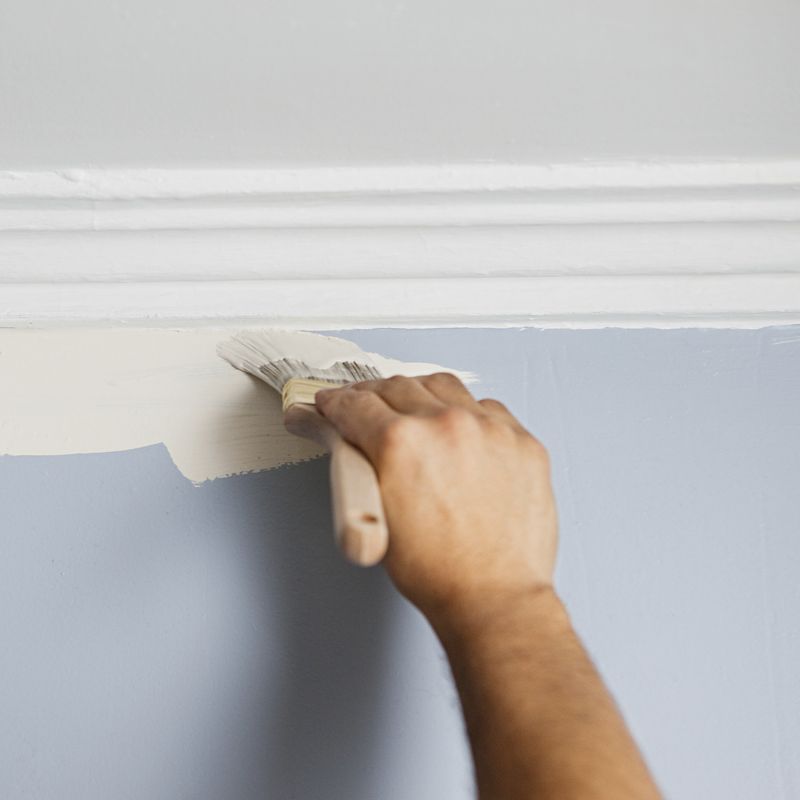
Test the color and sheen together
Ask whether your color sample uses the same product and sheen as the proposed finish. A sample intended only to demonstrate color may not show the final surface accurately.
For a meaningful comparison, request dried samples of the actual candidate finishes. View them vertically in the room, both facing them and looking along the surface. Check morning or afternoon daylight where relevant, then turn on your usual evening lighting. Sherwin-Williams explains how lighting and finish affect perceived color.
Pay particular attention to long walls, side lighting and darker colors. Do you enjoy the reflected highlights, or find yourself looking at them instead of the color? Use that observation to narrow the choice. If an uninterrupted hallway looks too shiny in satin, assess a lower-sheen product with appropriate cleaning performance before abandoning the color you like.
Agree on the sample’s purpose. A board helps compare color and reflection; a safely prepared wall sample can also show how the actual surface texture will look.
Set realistic cleaning and touch-up expectations
Ask when the new finish can be cleaned. Dry to the touch, ready for another coat and fully cured describe different stages. Cure and cleaning instructions vary by coating and conditions; use the selected product’s directions rather than a universal number of days.
Begin with the manufacturer’s recommended gentle cleaning method and test an inconspicuous area. Repeated abrasive rubbing can change a finish’s appearance. Sherwin-Williams calls an unwanted increase in shine from rubbing burnishing. A shinier patch may therefore be a cleaning mark rather than dirt that needs more scrubbing.
Keep leftover paint labeled with the exact product, color, sheen and room. Ask how the painter expects small repairs to blend. Spot touch-ups may remain visible, and repainting a full wall to natural boundaries can sometimes give a more consistent result. This matters when choosing a finish for an area you expect to repair repeatedly.
Pre-estimate finish checklist
For your interior painting estimate, explain the appearance you want and how each room is used. The contractor should assess the surfaces and recommend a compatible coating system. Ask for the proposal to name the product and sheen for each surface, with preparation and primer requirements. Bring a short list:
- Rooms and surfaces, including ceilings, doors, trim and built-ins.
- Areas exposed to hands, furniture, grease, humidity or splashes.
- Existing defects and how much improvement you expect.
- Any pre-1978 or unknown-age painted surfaces.
- Preferred appearance, with actual product-and-sheen samples where possible.
- Cleaning expectations and questions about cure, touch-ups and care.